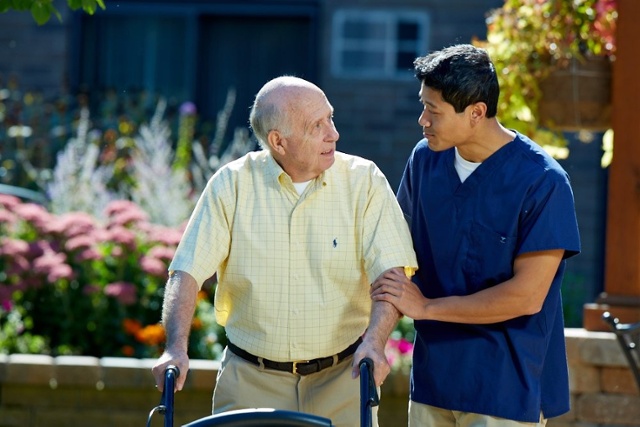
When someone you love is getting older, their safety is always somewhere in the back of your mind, whether they're at home or settled into a senior living community.
Falls are one of the most common ways an older adult can get hurt, but many falls can be prevented with a few thoughtful changes.
More than one in four adults 65 and older report falling each year, though less than half tell their doctor about it. Even a small fall can be serious, but fall prevention steps taken now can help keep your loved one safe.
Whether your loved one lives at home or in a senior living community, these fall prevention tips may help reduce their chances of falling so they can live a happier, safer life.
A Fall Prevention Checklist to Keep Seniors Safe
Keep outdoor walkways clear.
Icy, snow-covered or uneven paths can be especially risky in the colder months. If your aging parent or grandparent goes outside, make sure their walkway is clear. Sweep away stones and leaves, level out uneven sidewalks and use salt to melt ice at least 15 minutes before they walk on any frozen walkways in the winter.
Clear the floor inside.
Remove throw rugs, which can catch on shoes, canes and walkers and throw off your loved one's balance. Move boxes, cables and wires, shoes and anything else that could get caught underfoot out of the way.
Use non-slip mats on linoleum and tile.
Mats and decals can provide traction on bathroom, kitchen and shower floors. Consider adding these mats to any surface that's slippery even when it's dry.
Install grab bars at key locations around the house.
Anywhere an older adult regularly sits and stands, like near the toilet, bath or shower, can be a potential fall location. A metal bar can provide stability when sitting, standing or rounding a corner.
Keep commonly used items in easy-to-reach places.
Anything your loved one uses regularly should be stored in an easily accessible location. Bending over, stooping and reaching can cause aging adults to lose balance and feel dizzy, often leading to a fall. Avoid placing frequently used items in low drawers or cabinets.
Install handrails and masking tape to stairs and walkways.
If a person loses their balance on a staircase, make sure there's something for them to stabilize themselves. Colored masking tape on the edge of each step can help delineate them for those with poor eyesight, reducing the chance of tripping.
Install motion-activated lighting in key areas like hallways, bedrooms and bathrooms.
Motion-activated lighting placed in frequently visited areas can make it easy to see underfoot, reducing the risk of a trip. Place flashlights within reach of beds and in other areas of the home in case of power outages.
Install a colored toilet seat.
A study by the CDC found that more injuries occur when using the toilet than in the shower or bathtub. Choosing contrasting colors for the toilet seat can help older adults know which position the seat is in before sitting down. Try installing a black toilet seat on a white toilet to increase the contrast for adults with weaker eyesight.

Karen B., national director of life enrichment at The Goodman Group, explains how fall prevention shows up in the day-to-day at communities managed by The Goodman Group.
Fall Prevention Is Part of Everyday Life at Communities Managed by The Goodman Group
Fall prevention is woven into everyday life at communities managed by The Goodman Group.
FIT Functional Fitness®, the individualized exercise program available at every community, builds the core strength and balance that helps residents stay steady on their feet.
Some communities also offer a dedicated fall prevention course, an eight-session program held twice a week over four weeks.
"We cover everything from how hearing, vision and footwear can affect your risk of falling, to how to set up your apartment for safety and the importance of staying active," says Karen.
Developed with support from the clinical team and drawing on the CDC's STEADI framework, the course also makes room for the fear of falling itself.
"The open dialogue in a safe space to talk through fears and past falls helps residents realize they aren't the only ones who've experienced this and that there are still plenty of ways to stay active and well," Karen says.
For Karen, the program is personal as much as professional.
"I have aging parents and in-laws, and I recognize fall risks in their everyday lives that I know we can help reduce," she says. "Residents are excited to take a more active role in their own safety and independence."
Good Habits to Prevent Falls
Making the home safer is only one part of the picture. A few everyday habits, woven into your loved one's routine, can help them feel steadier too.
Take Your Time Sitting and Standing
It's easy to rush through small moments, like standing up from a chair or getting out of bed, but taking that extra moment matters.
Remind them that it is okay to move slowly because changing positions too quickly can cause a sudden change in blood pressure, which may result in your loved one becoming dizzy, losing consciousness and falling.
Keep Them Moving
Staying active is a great way to help prevent falls or other injuries. Being active can be as simple as walking 10 minutes a day or low-impact fitness exercises like chair yoga.
With a doctor’s approval, other options for exercise include a favorite sport such as golf, tennis, swimming, bicycling, resistance training or Rock Steady Boxing.
Keep Pet Feeding Time Fall-Free
If your loved one has a pet, a little training can help mealtime go more smoothly for everyone.
An excitable dog or cat can get underfoot at feeding times, so teaching pets to wait patiently for their own meal helps keep things calm and safe.
Review Their Medications
Medications can affect balance in ways that aren't always obvious.
Sitting down with your loved one's doctor to go through everything they take, including over-the-counter medications and supplements, can help catch anything that might be affecting their balance and open the door to options that support their strength instead.
Keep Their Doctors' Appointments
Health, medications and activity levels are also factors that can either contribute to or reduce your loved one's risk of a fall. That's why it's important they have regular health checkups where your loved one can talk to their doctor about the risks of falling.
Make sure they're on a regular checkup schedule with their general physician and make appointments to meet with specialists to check their eyesight and hearing.
Staying active supports fall prevention, and it also helps your loved one keep doing the things they enjoy most. Even moderate exercise can improve cardiovascular health, bone density, immune function and contribute to a longer life.
With care and built-in good habits, you can help lower your loved one's risk of a serious fall.
"At the end of the day, this comes down to protecting quality of life and helping residents stay as independent as possible," says Karen.