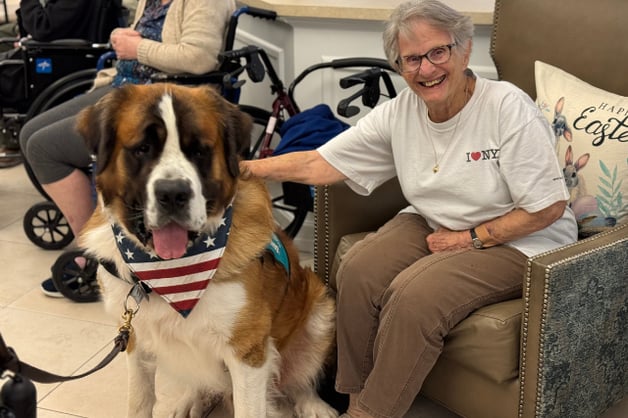
Pet therapy for seniors is a proven winner, helping to boost physical, mental and emotional health. A recent study concluded that seniors who own a pet for five or more years actually experience delayed aging in the brain.
More than a decade ago, communities managed by The Goodman Group saw the value of animal therapy in senior living settings and we’ve worked to expand pet-oriented programs ever since. These programs are a natural fit, says Haley B., life enrichment director at The Lakes at Stillwater in Stillwater, MN, a campus managed by The Goodman Group. They offer a really therapeutic way to engage residents who love or used to have pets but can no longer care for them.
“You cannot dismiss the power of engagement,” she explains. “Even residents who never were animal owners or lovers, look forward to the next visit.”
Pet therapy benefits residents in all neighborhoods of our managed senior living communities, from independent and assisted living to memory care and skilled nursing.
Animals Bring Joy and Much More
When therapy dogs or family pets visit senior living communities, there are smiles all around. But the benefits for residents go far beyond a warm greeting. Certified therapy animals are highly trained and calm in manner, providing sensory and nostalgic stimulation that touches all aspects of personal wellbeing.
Physical benefits:
-
Increased exercise through dog walking opportunities
-
Reduced heart rate and blood pressure
-
Increased mobility, including balance and gait when walking and muscle coordination when petting
Emotional and mental health benefits:
-
Elevated mood
-
Decreased feelings of loneliness
-
Reduced anxiety and depression
Social benefits:
-
Group settings that foster interaction between residents and the therapy dog
-
Family visits with pets maintain connection and engagement
-
Opportunities for connection with team members and fellow residents
Haley mentions that residents love the human volunteer dog handlers, too and get added benefit from building interpersonal connections with them. 
Pet Therapy in Action
Haley contacts one of the local pet therapy organizations to request visits. Two dogs regularly visit The Lakes at Stillwater. Tater is a rescue mutt and Harvey, an English Cream golden retriever. Both of them work with their owner/handler. Many residents at The Lakes at Stillwater previously bred or trained dogs, so they love the variety of breeds that visit.
When these volunteer teams visit, their time is scheduled among the community's neighborhoods so everyone has an opportunity to participate, with visits tailored to each care level. The dogs actively seek out residents they recognize from previous visits. "
“Independent living and assisted living residents love it,” says Haley. “They want to know when the dogs are coming back and if they can stay longer.”.jpg?width=261&height=392&name=RDG-1%20(1).jpg)
In memory care, residents gather in a circle so the dog can spend one-on-one time with each person. Their calm temperament invites petting and conversation, often sparking fond memories of past pets. For those who can't join the group, the dogs make individual room visits as well.
Therapy pets are trained and equipped to sense when someone needs help. Haley and her team have noticed that the dogs naturally gravitate to the residents who need more assistance. They will lay at the person’s feet or just sit quietly next to them, exuding their special sense of calm.
Therapy dogs are also trained to use their heightened sensing capabilities to notice things humans don’t. Sometimes, a dog will pick up on someone who needs help and alert a team member.
While the dogs are actively engaging, memory care residents are visibly calmer when they visit. In skilled nursing, hospice groups who help care for certain residents bring additional levels of support onsite and that often includes visits from pet therapy animals.
Dogs and Cats . . . and Reptiles Oh, My!
All senior communities around the country managed by The Goodman Group strive to include regular pet visits for residents, though the number and variety of animals vary. A surprising diversity of animals make good therapy pets to help alleviate anxiety and depression. Not only dogs and cats, but also fish, reptiles and horses.
Participation with horse organizations offers “bigger scale” therapy for residents of The Lakes at Stillwater. Haley says a number of residents competed or showed horses in their earlier years. Visiting with the horses allows them to retain or renew contact with equines and to reminisce. Relating their stories helps boost recall memory.
Beyond Certified Therapy Pets
A St. Paul police officer also drops by The Lakes at Stillwater from time for informal pet therapy sessions with her German shepherd.
At many senior living communities managed by The Goodman Group, independent and assisted living residents are welcome to bring their pets along. For those who couldn't, family members can bring animals in for visits. In especially touching cases, a family member will even arrange to bring a beloved pet that was rehomed so it can visit its original owner.
In memory care, when live animals aren’t available animatronic companion pets offer valuable comfort, calming and soothing to residents who have Alzheimer’s or other types of dementia. These battery-operated, interactive stuffed animals can seem surprisingly realistic. When turned on, they can react to resident interactions such as petting. They can bark or meow and if they’re lying on the bed, slight movement makes it appear as if they are actually breathing.
“Some memory care residents truly believe it’s their pet to care for,” Haley says, “even naming them.” Caring for these pets gives residents a sense of purpose and fulfillment.
“The specific meaning may be different depending on the resident’s stage of life,” says Haley, “but the value of pet therapy is undisputable.”